
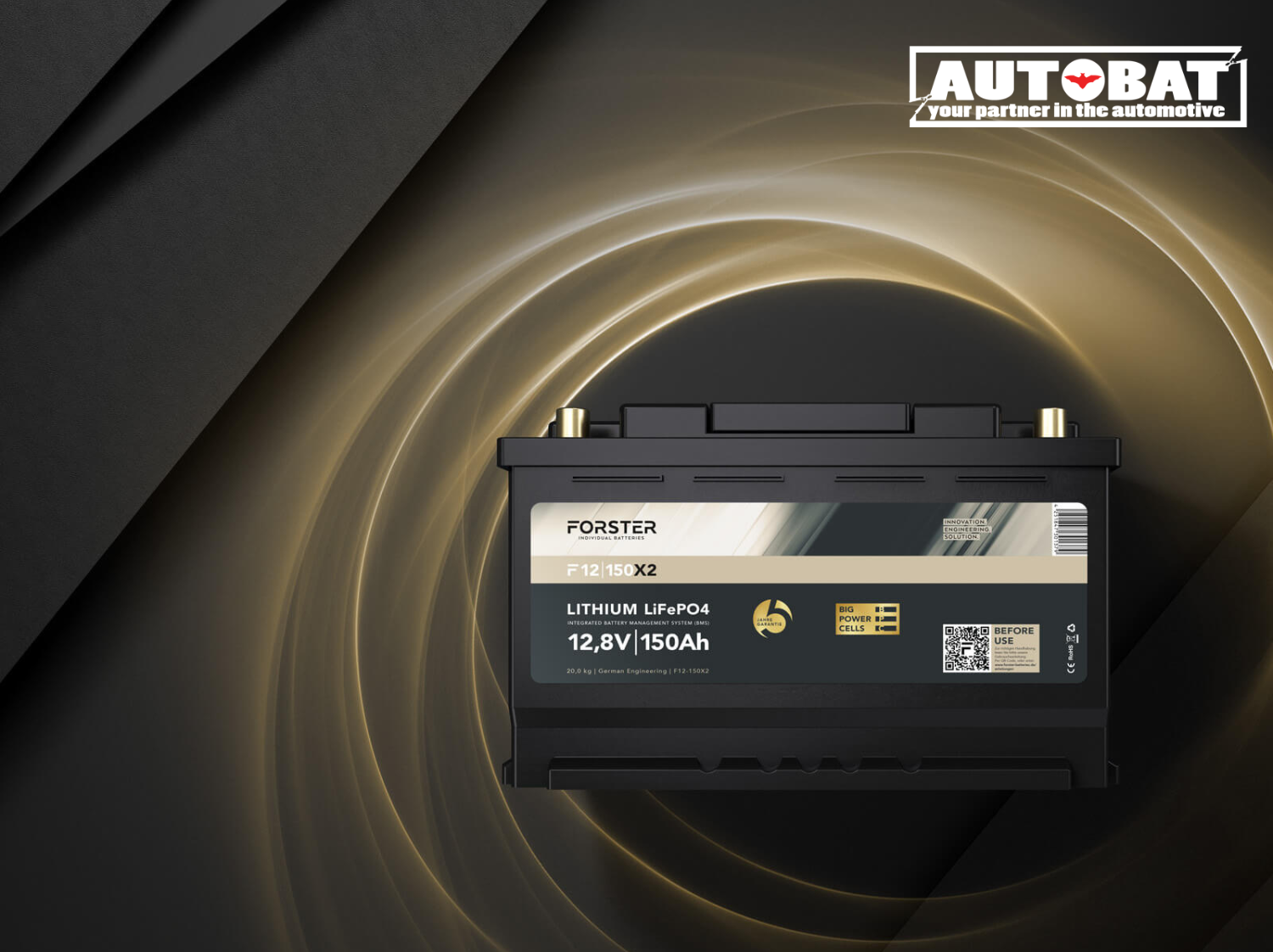
Why the LiFePO4 battery is the new standard for industry and heavy-duty recreation
Energy storage is central to making business processes more sustainable. Whether it concerns autonomous vehicles, industrial machinery, telecom infrastructure, or off-grid applications, choosing the right battery technology has a direct impact on operational costs, safety, and sustainability. The LiFePO4 battery (also known as a lithium iron phosphate battery or LFP battery) is rapidly gaining ground as the preferred technology for business applications.
Why is this specific chemistry the only right choice for heavy-duty applications, and why does it outperform traditional lead-acid and AGM batteries?
What is a LiFePO4 battery?
A LiFePO4 battery is a type of lithium-ion battery that uses lithium iron phosphate (LiFePO4) as the cathode material. This chemical composition differs in several ways from other lithium variants such as NMC (nickel manganese cobalt) or NCA (nickel cobalt aluminum).
The most important features:
- Nominal cell voltage of 3.2 V per cell
- Typical lifespan of 2,000 to 6,000 charging cycles
- Thermal stability thanks to the strong P-O bond in the crystal lattice
- No use of cobalt, which makes the supply chain simpler and more ethical
- Low self-discharge of approximately 2-3% per month
Why choose LiFePO4?
For companies, the choice of battery technology is not only about technical specifications, but also about total cost efficiency over the entire service life, reliability and safety certification. The LiFePO4 battery scores highly in all these areas.
1. Superior safety
In industrial environments, safety is non-negotiable. LiFePO4 batteries are thermally stable and less susceptible to thermal runaway, the dangerous chain reaction that can lead to fire or explosion in other lithium chemistries. This makes the technology suitable for applications in enclosed spaces, vehicles, and critical infrastructure. The batteries comply with international standards such as UN38.3, IEC 62619, and UL 1973.
2. Long service life and low costs
Where traditional lead-acid batteries need to be replaced after 300 to 500 cycles, a high-quality LiFePO4 battery can easily last 3,000 to 5,000 charging cycles, and in some industrial applications even up to 8,000 cycles. Over a period of ten years, this results in significant cost savings , despite the higher initial purchase price.
3. Compact design and low weight
Compared to lead-acid batteries, LiFePO4 systems offer two to three times higher energy density. This is a decisive advantage for applications where space and weight are limited, such as in electric forklifts, AGVs (Automated Guided Vehicles), and marine systems.
4. Fast charging and high discharge rate
LiFePO4 batteries accept high charging currents and, with the right charging infrastructure, can be charged in one to two hours . charged. This is crucial in 24/7 operations where downtime costs money. In addition, they retain their capacity well at high discharge rates, making them suitable for peak power in machines and vehicles.
B2B applications of LiFePO4 batteries
LiFePO4 technology can be used in a wide range of business sectors:
- Electric internal transport: Forklifts, AGVs, and transport robots in distribution centers and factories benefit from fast charging capacity and long service life.
- Telecom and UPS systems: As a backup power supply for transmission towers, data centers, and critical networks, LiFePO4 batteries offer a reliable alternative to VRLA batteries, with a significantly longer service life.
- Battery energy storage system: LiFePO4-based battery energy storage systems are used to absorb power peaks, stabilize the electricity grid, and store excess solar energy for later use.
- Marine and offshore: In shipping and offshore applications, the safety and robustness of LiFePO4 systems reduce the risk factor in humid, salty environments.
- Medical equipment: Portable and stationary medical devices require a stable, safe, and long-lasting power circuit, for which LiFePO4 is ideally suited.
- Construction and outdoor applications: From mobile workstations to construction machinery, the robustness of LiFePO4 batteries makes them suitable for use in demanding outdoor environments.
LiFePO4 versus other battery technologies
Compared to lead-acid batteries (AGM/GEL/VRLA): Lead-acid batteries are cheaper to purchase but have a shorter service life, higher weight, and lower energy density. With intensive use, the total cost over the entire service life of LiFePO4 is more favorable after two to three years.
Vs. NMC lithium battery: NMC batteries offer higher energy density but are more sensitive to heat and thermal runaway. For applications where safety is a priority, LiFePO4 almost always wins.
Vs. NiMH battery: Nickel metal hydride batteries are robust but heavier and less efficient in charging and discharging cycles. They are increasingly being replaced by LiFePO4 in industrial contexts.
What should you look out for when purchasing?
The quality of LiFePO4 batteries varies considerably between manufacturers and suppliers. When purchasing, the following points are important:
- Certifications: verify that the battery complies with IEC 62619, UL 1973, CE marking, and, if applicable, UN38.3 for transport.
- BMS (Battery Management System): a high-quality BMS is essential for cell balancing, overprotection, and communication with external systems (CAN bus, RS485, Modbus).
- Warranty conditions: reliable suppliers offer a minimum of 5 years' product warranty and transparent cycle warranties.
- Scalability: choose systems that are modularly expandable, so that your energy capacity grows along with your business activities.
- Local service and support: a supplier with local technical support and replacement parts reduces downtime in the event of malfunctions.
- Origin of the cells: inquire about the brand and origin of the lithium cells (A-grade). Brands such as CATL, EVE, and BYD are among the most reliable cell manufacturers in the world.
LiFePO4 and sustainability: a strategic advantage
More and more B2B organizations have set sustainability targets in their sustainability and social objectives. LiFePO4 batteries fit seamlessly into these ambitions: they contain no cobalt, are free of heavy metals such as cadmium and lead, and are largely recyclable. In addition, they extend the service life of electrical systems, which reduces the overall carbon footprint of your business processes ..
Conclusion: LiFePO4 as a future-proof B2B investment
The LiFePO4 battery combinessafety, long life, high reliability, and a favorable total cost over the entire service life in a way that no other battery technology currently matches for most business applications. Companies that invest in LiFePO4 systems now are investing in infrastructure that will last ten to fifteen years, aligns with sustainability goals, and ensures operational continuity.
Would you like to know which LiFePO4 system best suits your specific application? Contact our specialists for a no-obligation consultation and discover how you can take your energy management to the next level.